The Most Affordable USB Microphones I Recommend in 2026
Electronics have gotten more expensive, and smaller established brands are having to cope with modern manufacturing challenges along with customer demand for new more affordable options. Some of my favorite entry-level USB mic recommendations like the AT2100x are no longer available. The similar Samson Q2U is still around, but the price has increased from $69 to $99, making it harder to recommend given other options available.
So what are the most affordable USB mics I’d recommend for creators on a budget in 2026?
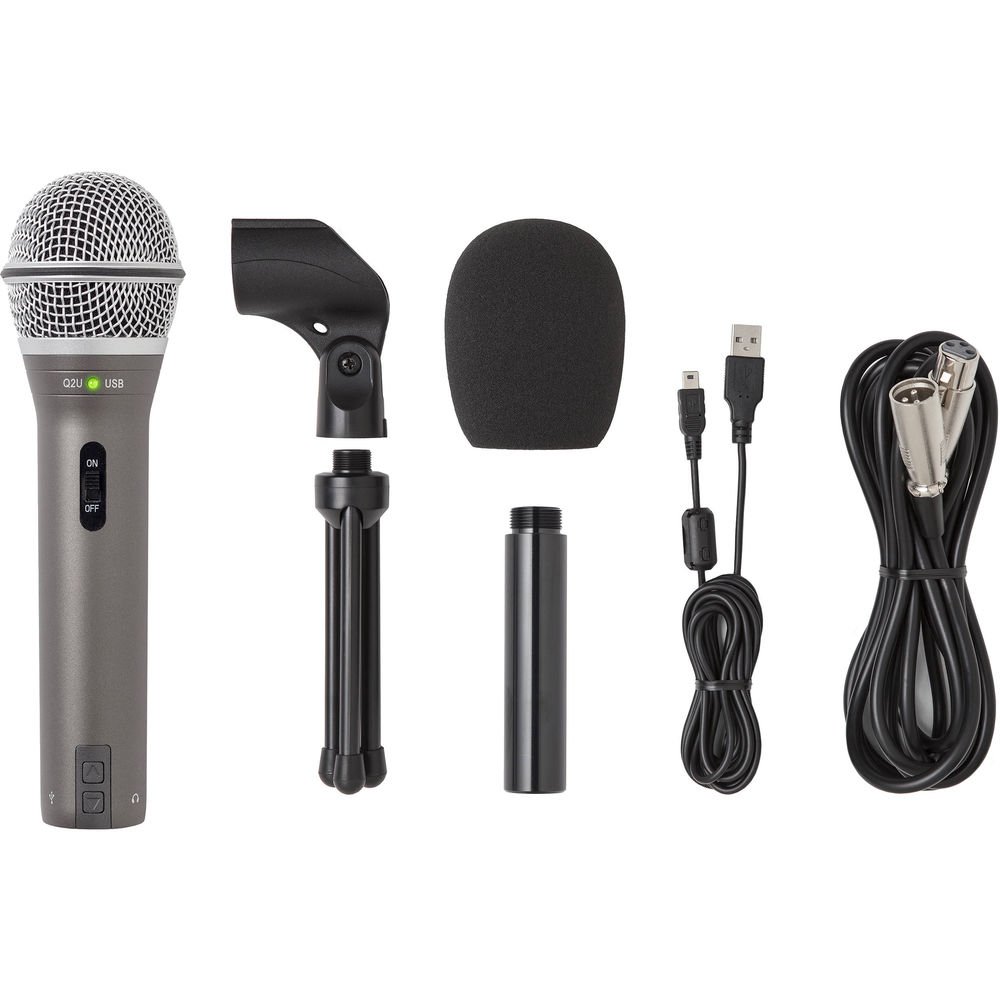
Samson Q2U with its included accessories
The Samson Q2U I’ve recommended for years is still a great mic, and includes accessories like a windscreen and basic tabletop stand. I have multiple of these that I used to send out in guest kits for client podcasts. I bought mine years ago on sale for as low as $50, back when its retail price was $69. Now that they’ve upgraded the USB port to USB C, it costs $99, so I’m less likely to recommend it at that price even though it’s still a great mic for the money. Especially the old model with the inferior mini-USB connection, which retailers are also selling at the new elevated price.
The only options these days I see that are under $99 are either discounted old stock/discontinued mics that were my secondary choices like the Deity VO-7U, or options from no-name brands which I cannot recommend (any of the brands that start with F that show up in Amazon search).
The vast majority of the lowest cost options do not include a headphone output on the mic itself, which is important so you can hear yourself with “zero latency” while you record, while also routing your computer’s audio through that same output so you can simultaneously hear remote guests or your recording and editing software.
There are brands I’m not as familiar with like the $66 NearStream AM15X, which sound OK on YouTube reviews I’ve seen. But in my experience with these types of more affordable brands that are less established in the professional audio space, you definitely get what you pay for. They have a cheaper build quality than anything Audio Technica, Shure, and even Samson make, which can impact your audio quality and recording experience in ways you don’t expect. The most glaring issue with these significantly cheaper mics is the lack of proper internal shock mounting and resonance dampening. So if you bump these mics, the metal shell rings like a bell and any thump of your desk sounds like an explosion in your headphones.
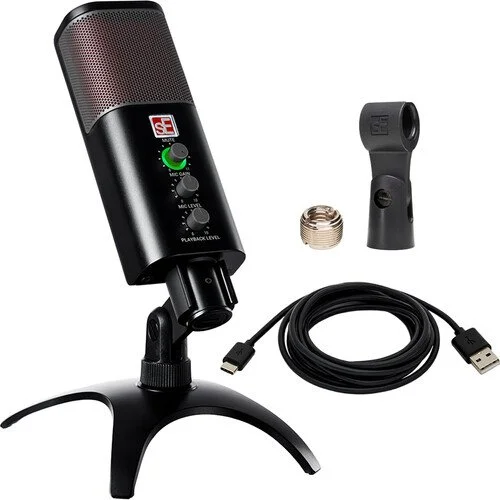
sE Electronics NEOM USB mic with its included accessories. Pop filter and mic stand extension tube or boom arm are not included but highly recommended.
For a little more money at $99, I’d actually recommend the sE Electronics NEOM. It is by far the best sounding mic for the price right now! It is a condenser mic instead of dynamic, so it will pick up more room noise. But it captures your voice much more accurately. This is what I’d send out for guest kits today if I were still offering that service for clients. To get the best sound, I recommend adding a low profile pop filter to reduce plosives, and a mic stand extension tube to elevate the mic closer to your mouth which will minimize room noise being picked up.
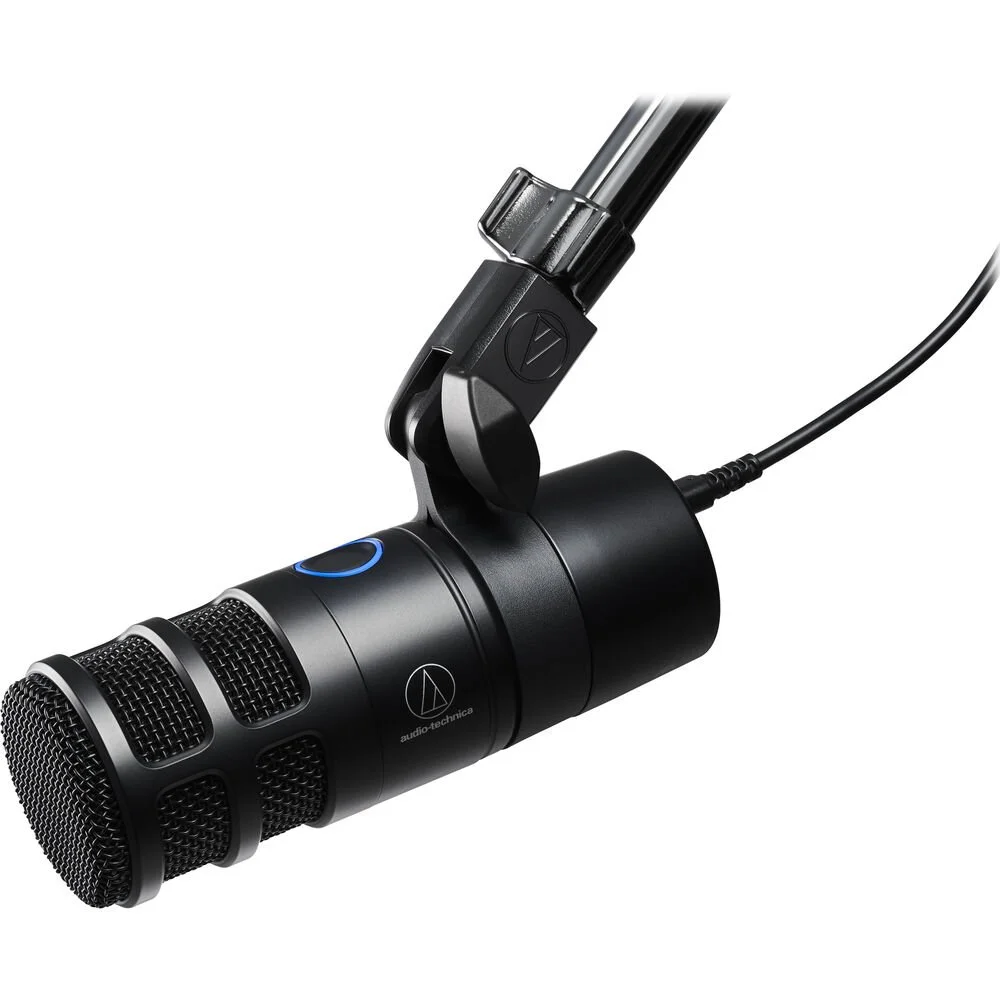
AT2040USB microphone
Audio Technica’s new dynamic USB microphone that “replaced” the AT2100x as well as its predecessor, the AT2005USB, is the AT2040USB. At $159 I do feel like it is worth the cost if your budget allows. It is a great sounding microphone with a solid build quality, and could help minimize room noise and reverberance compared to the sE NEOM, which is a much more sensitive condenser microphone. It also has that “broadcast mic look” if you’re doing video and your mic will be in frame (which I recommend since the closer you get to your mouth, the less room noise will be a factor). It does also benefit from a good windscreen.
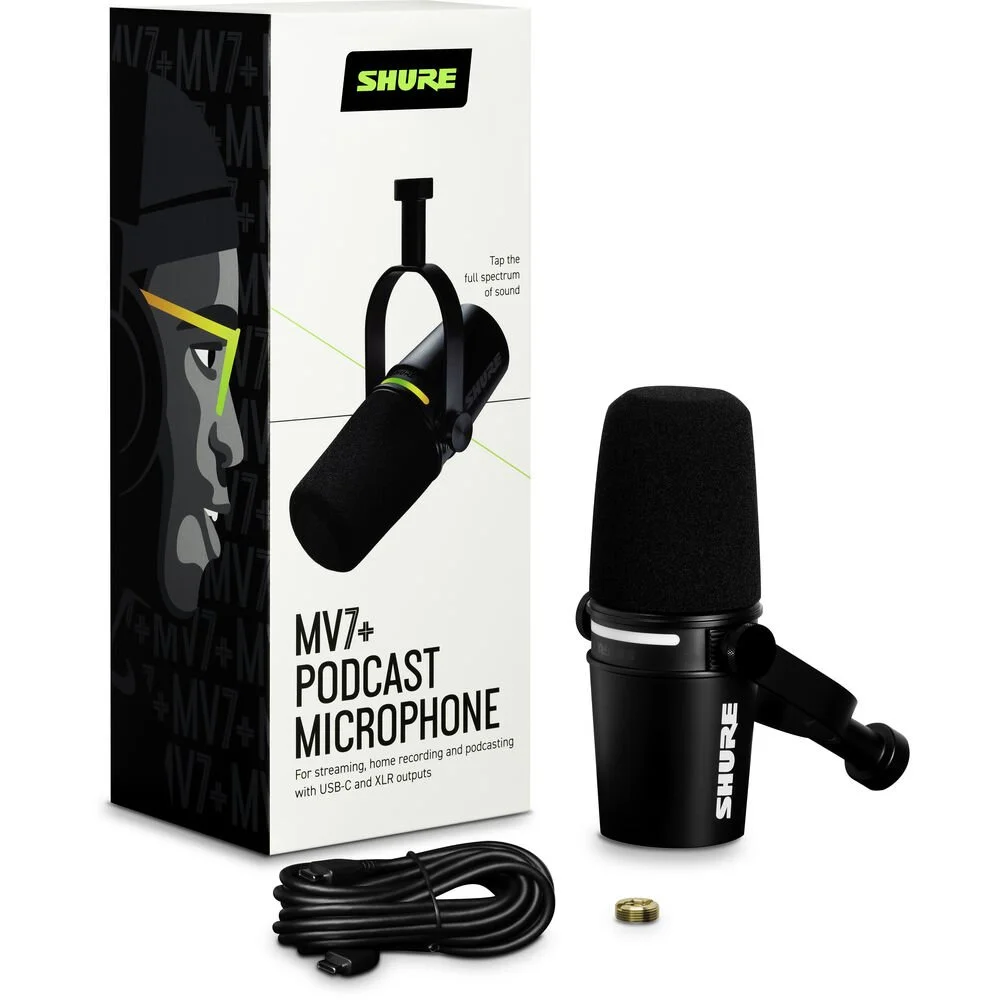
Shure MV7+ USB microphone
The best USB mic overall (in my opinion) is still the Shure MV7+, currently available for $269. The on-board DSP (Digital Signal Processing) is easy to use with their app and really makes a difference with its internal compression and EQ settings. There’s a reason why you see so many of them online and it is well worth the investment if your budget allows.
Keep in mind that you will still need to budget for accessories, regardless of your mic. For any of these options that include a basic tabletop stand, I do recommend adding a mic stand extension tube to get it closer to your mouth, or spend a few dollars more on a nice boom arm. Windscreens and pop filters that fit your mic are also highly recommended to tame those plosives. Headphones or earbuds with a 3.5mm jack (not USB) are also a must. Total, I’d recommend budgeting at least $150.
While the price of audio recording electronics has been increasing recently due to global economic factors outside of manufacturers’ control, the options available at just $99 compared to what we had to work with back when I started pushing faders in 1989 still blow my mind. And that doesn’t include the fact that multi-track tape machines and audio consoles required for recording before home computers and DAWs were absolutely unattainable for beginners.
Any serious creative endeavor requires an investment. It doesn’t matter if it’s a hobby or part of your business. And the time (and enjoyment) cost using sub-par equipment long term is well worth an additional $40+ up front. If you’re serious about giving your audience the best experience possible like I am, please don’t skimp on your tools. Your audience deserves better. In 2026, $99 is a completely reasonable entry-level budget for anyone serious about recording and publishing good audio content.